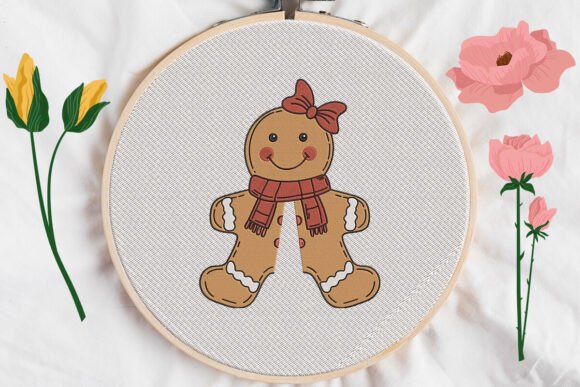
Reviewing the Cute Gingerbread Girl Applique
As a designer who spends more time staring at stitch maps than actual fabric, I have learned that not all holiday motifs are created equal. Some designs look charming on a screen but turn into a tangled mess of thread breaks and puckering once they hit the machine. When I first loaded the Cute Gingerbread Girl Applique Embroidery file into my software, I was looking for specific indicators of quality: clean vector paths, logical stitch order, and a balance between visual appeal and structural integrity. What I found was a design that genuinely understands the mechanics of applique while delivering that nostalgic, sweet aesthetic clients crave during the holiday season.
First Impressions and Visual Personality
The immediate mood this design creates is warm and inviting. It avoids the overly complex detailing that often plagues seasonal embroidery, opting instead for bold shapes and clear lines. The gingerbread theme is classic, but the "girl" aspect adds a character-driven element that works well for personalized gifts. From a layout perspective, the composition is balanced. The applique sections are distinct from the satin stitch borders, which is crucial for maintaining clarity. If you are an Etsy seller or run a small craft business, you know that customers often view products on mobile screens where tiny details get lost. This design holds its own even at smaller scales because the silhouette is strong.
The visual personality leans towards whimsical yet professional. It does not feel childish in a way that limits its market; rather, it feels like a boutique item you might find in a high-end home goods store. This versatility is key for a machine embroidery design intended for commercial use. It can sit comfortably on a child’s sweater or a sophisticated tote bag without feeling out of place.
Real-World Application: The Tote Bag Test
To truly evaluate an embroidery file, you have to imagine it in production. I recently considered using this design for a batch of custom canvas tote bags for a local holiday market. Canvas is a forgiving fabric, but it has a coarse texture that can interfere with fine stitching. Here is where the applique design structure shines. By using fabric patches for the main body of the gingerbread girl, the design reduces the total stitch count significantly compared to a full fill-stitch version. This means less pull on the fabric, resulting in a flatter, more professional finish on the tote.
The contrast between the textured canvas and the smooth satin stitch outlining the applique pieces creates a tactile depth that customers love. It elevates the perceived value of the handmade product. When I mocked this up for a printable mockup to test online engagement, the design stood out clearly against both light and dark background colors. This adaptability is rare and valuable for design assets meant for diverse inventory.
Performance on Various Fabrics and Hoops
While the design performed beautifully on canvas, I had to think critically about other applications. For sweatshirt embroidery, the bulk of the fleece requires careful stabilization. The applique method helps here, but the density of the satin stitch borders must be monitored. If the stitch density is too high, it can cause the fleece to pucker or the stitches to sink into the pile. I recommend using a cut-away stabilizer for knit fabrics to ensure longevity after washing.
On thinner materials, such as those used for baby embroidery projects or lightweight t-shirts, the design remains viable but requires a different approach. The running stitch tack-down phases in the applique process are essential to keep the fabric layers aligned. However, one must be cautious with curved surfaces like caps. The flat nature of the gingerbread shape might distort slightly on the front panel of a structured cap unless hooped perfectly with a strong backing. For embroidered patch creation, however, this design is ideal. The clean edges allow for easy cutting and heat-seal application, making it a versatile digital embroidery file for multi-product businesses.
Technical Considerations for Designers
Before committing to a large production run, there are practical steps every embroidery project manager should take. First, always test the design on scrap fabric identical to your final material. Check the thread color contrast. While the default colors might suggest traditional brown and red, experimenting with non-traditional palettes can open new markets. Imagine this design in pastel threads for a spring-themed variation or monochrome for a modern, minimalist look.
Inspect the small details. In an applique design, the transition between the fabric edge and the satin stitch border is critical. Ensure there are no jump stitches that could unravel during wear. Review the hoop size requirements. Although this design is likely compact enough for standard 4x4 or 5x7 hoops, confirming the exact dimensions prevents last-minute resizing issues that can distort the aspect ratio. Resizing an embroidery design beyond ten percent can lead to stitching errors, so it is best to use the file at its intended scale.
Furthermore, consider the washing instructions for the finished product. Applique edges can fray if not secured properly. A tight, well-programmed satin stitch border is necessary to encapsulate the raw edges of the fabric patch. If you are selling these as personalized gift items, durability is part of the brand promise. A fraying edge looks amateurish and can lead to negative reviews.
Commercial Viability and Brand Consistency
For commercial embroidery professionals, consistency is everything. This design offers a reliable template that can be standardized across different products. Whether it is a tote bag design, a cushion cover, or a kitchen towel, the visual identity remains consistent. This helps in building brand recognition. Customers begin to associate that specific gingerbread style with your shop, creating trust and repeat business.
It is also important to verify licensing terms. While many designers offer files for personal use, selling finished items or digital products often requires a commercial license. Always check the provider’s terms before listing items on your small shop product page. Assuming permission can lead to legal issues that jeopardize your business. If the license allows for commercial use, this design becomes a powerful tool in your holiday catalog.
Final Verdict
The Cute Gingerbread Girl Applique Embroidery is a solid addition to any holiday collection. It balances charm with technical practicality, making it suitable for both novice hobbyists and experienced craft business owners. Its strength lies in its simplicity and the smart use of applique to reduce bulk and increase durability. By paying attention to stabilizer choice, thread tension, and fabric compatibility, you can produce high-quality items that resonate with buyers. It is not just a festive motif; it is a well-engineered embroidery file ready for real-world application.